
Tag: eagle idaho dentist

  • 3 Questions To Ask When Visiting The Dentist

    3 Questions To Ask When Visiting The Dentist

    When we think about issues regarding our health, we often don’t think about our teeth. However, maintaining our oral health is key to preventing serious complications in the future. Frequent visits to the dentist can be very beneficial to your overall oral health, along with establishing an open line of communication with your dentist. Speaking freely with your dentist about your concerns and how you can improve is always helpful.

    Here are three questions to ask when visiting the dentist and why you should ask them:

    What can I do to improve my oral health?

    When asking this question, it is important to remember that everyone’s mouth is different. Some might have to do less, while others will have to do a lot more. Your dentist will give you information on what to do, specific to you. Some might have you brush or floss more, and who knows, they might even recommend that you use a different toothbrush. There is a lot more that goes into maintaining your oral health than one might think. If you feel a little uncomfortable asking your dentist this question, don’t! Just as one would speak with a doctor about health concerns, you should also feel comfortable doing so with your dentist.
    Eagle Idaho Dentist

    What can you do to improve my oral health?

    Like we said before, each mouth is different, meaning each mouth is going to have different problems. Some might grind their teeth and others might be self-conscious of bad breath. Either way, your dentist isn’t a mind reader. When you ask what you can do to improve or fix these things your dentist will be able to help you more effectively. It’s important to express your concerns and work together as a team in order to achieve your goal. Especially when you are experiencing pain or discomfort, this will help your dentist understand what is going on and hopefully prevent future problems.

    What is the current status of my oral health?

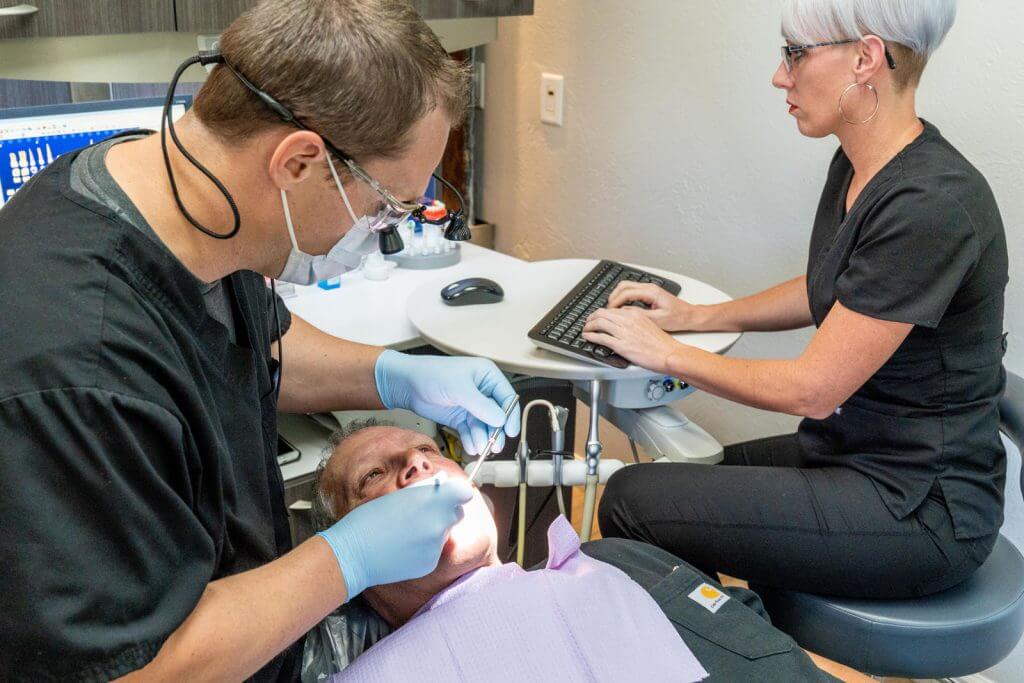
    Just as you get general health updates, it is important to not only know, but understand the status of your oral health. When asked, a dentist can perform a general exam of your mouth area, searching for lumps or anything else that might not belong. This can include gauging bone density and checking for unintentional wear due to teeth grinding. This just ensures that everything is functioning properly and is all preventative. If they find something of concern you can then begin to discuss proper treatment options along with suggestions to further prevent more damage.

    Whether it’s something or nothing, it is always better to be on the same page with any of your healthcare providers. Talking with them about concerns or questions helps your dentist to better do their job and help you in the long run. Many diseases and health issues can stem from the mouth and neck area, so if you have any concerns please share them with your dentist. Always better safe than sorry! An open line of communication will help us to build a better relationship with all of our patients.
  • Dental Hygiene Awareness Month

    Dental Hygiene Awareness Month

    The month of October is known for many things, Halloween being the most exciting. But, did you know it’s also National Dental Hygiene Month? You know what that means- a perfect time to go over the do’s and don’ts of basic dental hygiene. Dental hygiene can include anything from fresh breath, healthy gums, strong teeth, and more! But what is it exactly? It is the habits or practices that are conducive to maintaining the overall health of teeth or gums. With that being said, let’s start with the obvious!

    Dentist Visits

    Visiting your local dentist often, or at least twice a year helps regulate your oral health. Regular checkups and cleanings allow for your dental hygienist to keep everything in check. If something seems to be lacking the problem can be fixed before it gets out of control. During cleanings they will remove any build up, whether that be plaque or tartar, which helps prevent gum diseases. It is recommended that this happens at least twice a year or more often depending on the person and what your hygienist might suggest.


    Brushing Tips

    When it comes to brushing our teeth, we want it to be quick. However, it is very important that it is efficient and doing the job, rather than sweeping some bristles across the front of your mouth. Teeth should be brushed at least twice a day, and it is recommended to be morning and night for two minutes each. To ensure you are getting the most out of these two minutes you want to make sure you are cleaning both your teeth and gums with a soft-bristled brush. Brushes and bristles should be replaced every three to four months depending on how frayed the bristles are. If you aren’t quite sure what kind of brush or toothpaste you should be using, talk to your dentist or hygienist for recommendations specific to you!

    Flossing

    Flossing can be one of the easiest things to forget when it comes to your daily dental hygiene routine. So what makes it so important? Flossing helps breakdown plaque buildup, but also prevents future buildup, which eventually could lead to issues dealing with tartar. Flossing also improves the overall look, brightening your smile by taking away leftover food and plaque. The tiny little piece of minty string is also able to reach some of the areas that your toothbrush might not be able to. Now if you think that flossing just benefits your oral health, think again. Research has found that infection of the mouth, just like any other infection, can inflame blood substances. This could potentially advance blood clots and slow blood flow throughout the body. This of course is uncommon, but can be prevented by regular flossing.

    Mouthwash

    While mouthwash can’t replace brushing your teeth or cure bad breath, it certainly can play a significant role in improving your oral health. Mouthwash can help kill bacteria, prevent gingivitis, and strengthen enamel. However, all mouthwashes are not the same, so if you are looking for one to treat something in particular, again, you might want to consult your dentist or hygienist.

    What to Drink

    Most of us crave some sort of bubbly drink every once in a while. But how often is too often when it comes soft drink intake and oral health. Unchanging consumption of sugary drinks is one of the most common culprits of tooth decay. Sugars in juices, soda, and alcohol combined with already existing bacterias create acid that then attacks our teeth. Cavities are often linked to sodas and other acidic drinks, and are part of the early stages of tooth decay. A couple ways to prevent this other than stopping all intake is to drink quickly. In doing so the drink will have less time to sit and rot. The next thing you can do is wash your mouth out almost immediately after consumption. This will not allow the sugars and acids to sit on your teeth, hours on end.

    While oral health and dental hygiene might not be the most interesting, they are certainly necessary. These are just a few tips and tricks to help improve and maintain your oral health and keep get that smile brighter!

    If you need to visit with a dentist or hygienist to receive a second opinion on your teeth just contact us at on our website or by calling 208-939-4111.